
Best picks · three tiers
Best lean-to sheds
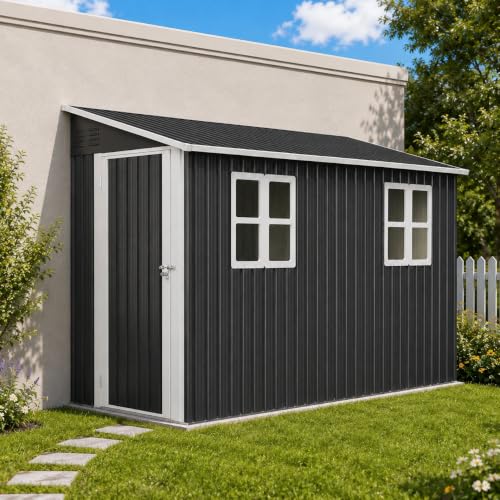
The YOPTO 4x10 Lean-to Shed with Floor at $324.99 is the best lean-to shed for most side yards: a floor included, reversible door installation, and a footprint built to sit flush against a fence or wall.
Picks by budget: beginner, intermediate and expert
AECOJOY Shed Lean to Storage Shed

$183.25 · 6 x 8 ft
Who it is for: A homeowner who wants a basic lean-to for bikes or tools against a wall without spending much.
The AECOJOY 6x8 lean-to at $183.25 is the least expensive lean-to shed in this catalog and still gives you a lockable steel structure at a real 6x8 footprint. AECOJOY sells this same lean-to shape in several sizes, so if 6x8 turns out to be too small, the larger 8x10 version in this same family is an easy next step.
Skip it if: Anyone who wants a floor included or a design rated for heavier equipment; check the spec page for floor details.
Check price on AmazonAMERLIFE 8x4 FT Lean-to Storage Shed with Lockable Door

$269.99 · 4 x 8 ft
Who it is for: Buyers who want a slightly larger lean-to with a reinforced frame at a moderate price.
At $269.99, this AMERLIFE 8x4 lean-to adds a reinforced frame over the entry-level AECOJOY design, a middle step before the vinyl SideMate line.
Skip it if: Anyone needing more than roughly 32 square feet; step up to the 8x10 AECOJOY or a full stand-alone shed instead.
Check price on AmazonDuramax SideMate Plus 4x10 Vinyl Lean-to Outdoor Storage Shed

$799 · 4 x 10 ft
Who it is for: Homeowners who want the most durable lean-to material available and are treating this as a buy-once purchase.
The Duramax SideMate Plus 4x10 vinyl lean-to at $799 includes its own foundation kit and is built from maintenance-free vinyl rather than painted steel, the same upgrade path resin buyers get over budget metal. Because it is longer than the standard SideMate at the same width, it also holds noticeably more along a fence line without needing a wider footprint than most side yards can spare.
Skip it if: Buyers who just need basic bike or tool storage and do not want to pay a premium for vinyl construction.
Check price on AmazonAlso worth a look


Prices change often; the button shows today's price on Amazon.
Why choose a lean-to over a stand-alone shed?
A lean-to shed is designed to sit flush against an existing wall or fence, which saves yard space and often needs less framing on the back wall since it borrows structure from what it leans against. The tradeoff is access: most lean-to sheds only open from the front, while a stand-alone shed can have doors or windows on more than one side.
The space savings add up more than buyers expect on a narrow lot. A stand-alone shed generally needs clearance on every side for maintenance and airflow, while a lean-to only needs that clearance on the open sides, which can be the difference between fitting a usable shed in a tight side yard and not fitting one at all.
See the full comparison in lean-to vs gable shed.
What size lean-to fits your side yard?
Lean-to sheds in this catalog run from about 4 feet wide up to 10 feet, and depth is usually the tighter constraint since most side yards are narrow. Measure the exact gap between your fence and any obstruction before ordering, and remember that flat-packed panels for even a modest lean-to can be wider than the assembled footprint suggests.
Storing bikes is one of the most common jobs for this category, and it is worth sizing specifically for them rather than guessing. An adult bike needs roughly 2 by 6 feet of storage footprint standing upright, so a 4x10 lean-to comfortably holds two to three bikes plus a narrow shelf for helmets and locks, while a 4x6 model fits one bike with tools alongside it.
How do the picks compare?
| AECOJOY 6x8 | AMERLIFE 8x4 | Duramax SideMate Plus 4x10 | |
|---|---|---|---|
| Price | $183.25 | $269.99 | $799 |
| Material | Metal | Metal, reinforced frame | Vinyl |
| Foundation kit | Check spec page | Check spec page | Included |
What does a lean-to need for a base and anchoring?
Even against a solid wall or fence, a lean-to still needs a level, well-drained base underneath it or the door will bind within a season. A gravel pad one foot larger than the footprint on the open sides, four inches deep, is the standard approach; size it with the gravel pad calculator. Because one side of the shed sits against an existing structure rather than open air, you generally do not need the full foot of clearance on that side that a stand-alone shed's gravel pad calls for, which trims the pad size and material cost slightly compared to a similarly sized stand-alone shed.
- Anchor to the fence or wall structure itself in addition to ground anchors where the manufacturer allows it
- Check that the wall or fence you are leaning against can actually bear the shed's weight and wind load
- Call 811 before digging any ground anchors, even for a small lean-to
How we chose these picks
Nothing on this list was assembled or tested in person. We compared manufacturer specifications for footprint, material and whether a foundation kit or floor was included, checked price per square foot against comparable lean-to designs, and weighted recurring themes in verified owner reviews, particularly reports on door alignment once the unit is anchored to an uneven fence line. We deliberately spread the three tiers across metal and vinyl rather than staying in one material, since the lean-to category splits cleanly along that line and buyers usually decide on material before comparing specific models.
Buying tips before you order
Confirm your fence or wall is actually plumb and solid before ordering a lean-to; several owner complaints in this category trace back to leaning the shed against a structure that was not straight to begin with. Check whether the floor and foundation kit are included, and lift heavy panels with two people even on a compact lean-to design.
What goes wrong most often with lean-to installs?
The single most common issue in owner reviews is not the shed itself but the wall or fence it is attached to. A fence panel that has settled or leaned even slightly over the years transfers that lean directly to the shed's door alignment, since a lean-to design depends on square, level support along its back edge. Before ordering, check your fence line with a level rather than by eye, and budget time to shim or reinforce that section if it is not perfectly straight.
Rain runoff is the second common complaint. Because a lean-to sits directly against a wall, water shedding off the house or fence above can pool at the seam if there is no gap or flashing, which shows up in reviews as unexpected water intrusion that a stand-alone shed would not experience in the same spot. Leave a small air gap where the manufacturer allows it, and check that any roofline above the lean-to actually directs water away rather than onto it.
The picks, side by side
Prices change often; the button shows today's price on Amazon.
More roundups
- Best metal sheds
- Best resin sheds
- Best shed anchor kits
- Best shed foundation kits
- Best shed shelving
- Best solar shed lights
Get these picks and prices by email
One page with every item, quantity and current price, so you can cost the whole project before you buy any of it.
Used only to send the list. You can also just read it on this page.Frequently asked questions
What is a lean-to shed?
A lean-to shed is built to sit flush against an existing wall or fence rather than stand alone in open yard space, which saves floor area and can simplify the back-wall framing. It typically opens only from the front, so match it to a spot with clear access on that side before ordering.
Can a lean-to shed be freestanding instead?
Most lean-to designs in this catalog are engineered specifically to be supported partly by the wall or fence they lean against, so freestanding placement is not recommended unless the manufacturer explicitly allows it. Check the spec page or manufacturer instructions before placing one away from a solid structure.
Do lean-to sheds come with a floor?
It varies by model. Some lean-to sheds ship with a floor included, while others, especially budget metal designs, sell it as a separate accessory or assume you will build on an existing pad. Check the specific listing rather than assuming, since this is a common source of surprise after delivery.
How much narrower is a lean-to than a stand-alone shed of the same size?
The footprint numbers are the same either way; the real difference is access and depth. Lean-to designs tend to run shallower front-to-back, since they are meant to fit a narrow gap along a fence or wall, while a stand-alone shed of the same square footage is often closer to square.
Is vinyl worth the extra cost for a lean-to shed?
If you want a lean-to that never needs rust touch-up or repainting, yes. Vinyl lean-to models in this catalog also tend to bundle a foundation kit, which offsets some of the price premium. Budget steel lean-to sheds remain a solid value if you are comfortable with occasional maintenance on seams and screws.
This page is researched guidance, not professional engineering, legal or building-code advice. Sizes, loads and permit rules vary by product and by town: check your local code and the kit manufacturer's instructions before you build.