
Best picks · three tiers
Best storage sheds
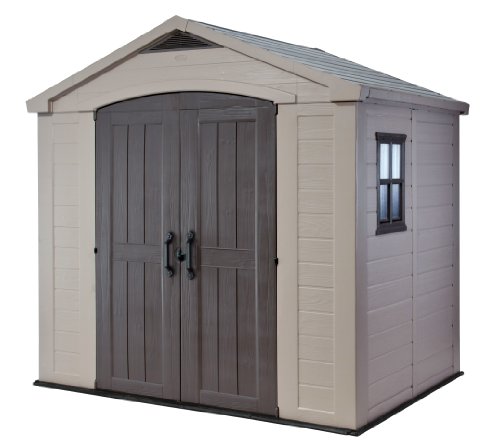
For most yards the Keter Factor 6x8 Resin Shed at $975.79 is the pick: it is large enough for a mower and tools, needs no painting, and has a skylight and vents built in without the assembly headaches of a wood kit.
Picks by budget: beginner, intermediate and expert
Aoxun Resin Outdoor Storage Shed

$499.99 · 6 x 8 ft
Who it is for: A renter or first-time shed buyer who needs basic weatherproof storage for a small mower and hand tools without spending four figures.
The Aoxun 6x8 resin shed sits at $499.99, which is low for a full-size 6x8 resin footprint. Its listing states a floor is included, the two things that actually separate a shed from a tarp.
Skip it if: Anyone storing a riding mower or expecting the panels to hold up under heavy snow load without extra anchoring.
Check price on AmazonArrow Sheds Amazon Exclusive Classic 10' x 8' Charcoal Steel

$789.98 · 8 x 10 ft
Who it is for: A homeowner who wants a shed they will not replace in five years and does not mind steel over resin.
The Arrow Classic 10x8 at $789.98 is a known, widely reviewed steel platform with a floor frame kit included, and it gives you close to 80 square feet, enough for a full lawn crew's worth of gear.
Skip it if: Coastal or very humid climates, where steel needs the drip edge and anchoring done right to avoid rust at the seams.
Check price on AmazonLifetime Outdoor Storage Shed

$1,478.85 · 8 x 10 ft
Who it is for: Someone who wants the largest, most durable resin shed on the list and is buying once for the long term.
The Lifetime 8x10 at $1,478.85 uses dual-wall HDPE panels with a steel-reinforced frame, a skylight and a window, and it is rated for the kind of snow and wind load that pushes cheaper resin panels to flex.
Skip it if: Buyers on a tight budget or anyone who only needs to store a few bikes and a mower.
Check price on AmazonAlso worth a look


Prices change often; the button shows today's price on Amazon.
What size storage shed do most people actually need?
Start by listing what has to fit inside, not the size that looks good in a photo. Lay out the footprint of every item you plan to store (mower, snow blower, bikes, trash cans, wheelbarrow), add 50 percent for aisles and the room to swing a door or tip a wheelbarrow, then round up to the next standard shed size and add 20 percent so you are not shopping again in two years. The shed size calculator runs this math for your exact list.
Door clearance matters as much as floor space. A shed that is technically big enough but has a narrow door will not let a mower or snow blower through without scraping paint off both. As a rough guide, a 42 inch riding lawn tractor deck needs a door at least 5 feet clear, a two-stage snow blower needs about 2.5 by 5 feet of parked space, and a wheelbarrow needs roughly 2.3 by 5 feet; add those up before you settle on a size rather than after you have already ordered.
Resin, metal or wood: which material should you buy?
Resin needs zero maintenance and will not rust or rot, but it flexes more in high wind than a steel-framed shed and dents if you lean a ladder against a wall. Metal is the strongest per dollar and typically the cheapest per square foot, but seams and screws need occasional touch-up to fight rust. Wood kits look the best and hold value in a resale, but they cost roughly four times as much per square foot and need paint or stain on a schedule.
Vinyl sheds, which in this catalog come mostly from Duramax, sit between resin and premium steel on price and often bundle a foundation kit that resin and metal competitors sell separately. If none of the three main materials feel like a clean fit, that is worth a look, especially for a lean-to design against an existing fence or wall.
See the full breakdown in resin vs metal shed and metal vs wood shed.
How do these picks compare on paper?
| Aoxun 6x8 Resin | Arrow Classic 10x8 Metal | Lifetime 8x10 Resin | |
|---|---|---|---|
| Material | Resin | Galvanized steel | Dual-wall HDPE resin |
| Price | $499.99 | $789.98 | $1,478.85 |
| Floor included | Yes | Floor frame kit | Yes |
| Best for | Small yards, first shed | Buy-once value | Long-term, heavy use |
What should you budget for beyond the shed itself?
Every shed needs a level, well-drained base. A gravel pad sized one foot larger than the shed on every side, four inches deep (six on soft or wet soil), is the standard approach; an 8x10 shed needs roughly 2.3 tons of crushed stone once you order the extra 10 percent for compaction. The gravel pad calculator and shed foundation calculator size this for your exact shed.
If you would rather pour a concrete slab than lay gravel, an 80 pound bag of concrete yields about 0.6 cubic feet, so an 8x10 slab at 4 inches thick, with 10 percent extra for waste, works out to roughly 1.09 cubic yards, or about 49 bags. Either base option works; gravel drains better and costs less upfront, while concrete gives a harder, more permanent surface that some HOA rules or larger sheds specifically call for.
- Anchors at every corner minimum, plus one every 6 to 8 feet along long walls
- A ramp if you are rolling in a mower: 1:4 slope for a riding tractor, 1:6 for a push mower
- Check your local code before you build; many towns cap the permit-free size below the 200 square foot IRC exemption
How we chose these picks
Nothing on this list was assembled or tested in person. These picks come from manufacturer specifications (footprint, panel material, included floor and hardware), the price per square foot each brand charges once you divide catalog price by floor area, and recurring themes in verified owner reviews, particularly complaints about door width, panel warping and included versus optional floor kits. We favored products where the published dimensions and photos matched the title exactly.
Buying tips before you check out
Measure your gate and any fence line the shed panels have to pass through before you order; flat-packed panels are wide even when the shed itself is modest. Confirm whether the floor is included or sold separately, since that is the single most common surprise in shed reviews. And always call 811 before you dig anchors or a foundation, even for a small shed.
How does your climate change the right pick?
In snow country, roofing pitch and panel rating matter more than the headline price. An unheated, low-risk shed generally sees roughly 0.67 times the ground snow load once you account for slope reduction, and a steel-reinforced resin or steel shed handles that better than a thin single-wall panel. If the shed uses asphalt shingles, the roof needs at least a 2/12 pitch, and anything between 2/12 and 4/12 needs double underlayment to actually shed water instead of trapping it.
In hot, humid or coastal climates, resin's advantage widens, since steel seams and screws need more frequent inspection near salt air, while a wood kit needs paint or stain touch-ups more often as sun exposure fades the finish faster. None of that rules out steel or wood in those climates, it just means budgeting a bit more time for maintenance than a resin buyer would.
The picks, side by side
Prices change often; the button shows today's price on Amazon.
More roundups
- Best trash can storage sheds
- Best vertical storage sheds
- Best vinyl sheds
- Best 3x6 sheds
- Best 4x10 sheds
- Best 8x10 sheds
Get these picks and prices by email
One page with every item, quantity and current price, so you can cost the whole project before you buy any of it.
Used only to send the list. You can also just read it on this page.Frequently asked questions
What is the best all-around storage shed size?
For most suburban yards, 8x10 or 10x12 covers a mower, tools and bikes with room to walk around them. Smaller lots or light storage needs (bikes, a few tools) do fine with a 6x8. Use your actual equipment list rather than guessing; a shed that is too small gets outgrown within a season.
Do storage sheds need a permit?
It depends on your town. The IRC exempts one-story detached storage sheds up to 200 square feet from a building permit, but many municipalities amend that down to 120 or even 100 square feet, and electrical work always needs a permit regardless of size. Setbacks from the property line and HOA rules apply no matter the size, so check your local code first.
Is resin or metal cheaper per square foot?
Metal is usually cheaper on a per-square-foot basis, with budget generic steel kits pulling that average down further, though premium steel lines run well above resin. Resin sheds average higher per square foot but need no paint, rust treatment or recoating over their lifespan, which narrows the real cost gap over several years.
Do I need a floor under my shed?
Yes, in some form. Many resin sheds ship with a floor included per its listing included; metal sheds often sell the floor frame as a separate kit; wood kits usually assume you are building on a pre-built gravel or concrete pad. Check the specific listing, since "floor included" and "floor frame kit" are not the same thing and this is the most common source of buyer surprise.
How much does a gravel pad add to the total cost of a shed?
For an 8x10 shed you are looking at roughly 2.3 tons of crushed 3/4 inch stone once you account for the 10 percent extra needed for compaction, on a 10x12 pad that gives a foot of clearance on every side. Cost varies by region, but it is a smaller line item than most first-time buyers expect relative to the shed itself.
This page is researched guidance, not professional engineering, legal or building-code advice. Sizes, loads and permit rules vary by product and by town: check your local code and the kit manufacturer's instructions before you build.