
Calculator
Shed Ramp Calculator
Ramp length is the threshold height times the slope ratio. For an 8 in threshold, a lawn tractor ramp at 1:4 (14 degrees, inside the 15 degree limit most tractor manuals set) runs 32 in long, a push mower ramp at 1:6 is 48 in, and a hand-cart ramp at 1:12 is 8 ft.
Shed ramp calculatorUpdates as you type
2.7 ft of run (32 in)
- Slope
- 1:4 (14.0°)
- Sloped surface length
- 33 in
- Deck boards (5.5 in wide)
- 6 boards at 48 in
- Stringers at 16 in spacing
- 4 x 3 ft
Most lawn tractor manuals prohibit driving on slopes steeper than 15°; 1:4 keeps you inside that with a small margin.
Ready-made shed ramps and ramp kits
Matched to this result, spread from budget to premium.

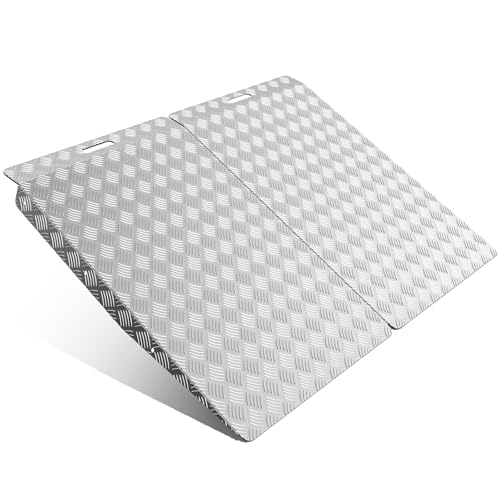

Prices change often; the button shows today's price on Amazon.
Which slope should a shed ramp be?
| Use | Slope | Angle | Why |
|---|---|---|---|
| Lawn tractor, zero-turn | 1:4 | 14.0° | Most tractor manuals limit operation to slopes of 15° or less |
| Push mower, wheelbarrow | 1:6 | 9.5° | Comfortable pushing a loaded barrow |
| Hand cart, wheelchair | 1:12 | 4.8° | ADA maximum slope for accessible ramps |
Run is threshold height times the ratio. Build the ramp at least as wide as the door opening and add a lip or cleat at the top so it cannot slide away from the sill.
More shed calculators
- Shed size calculator
- Shed foundation calculator
- Gravel pad calculator
- Shed anchor calculator
- Roof pitch calculator
- Snow load calculator
- Permit size checker
- Shed cost calculator
- Paint and stain calculator
Frequently asked questions
How long should a shed ramp be for a riding mower?
Multiply the threshold height by 4. An 8 in threshold needs about 32 in of run, which keeps the ramp near 14 degrees, inside the 15 degree slope limit most lawn tractor manuals set. A taller floor means a longer ramp: a 12 in threshold needs about 4 ft.
Should I build a ramp or buy one?
Ready-made aluminum or rubber shed ramps are fastest for thresholds up to a few inches and store away when not needed. For taller floors, or a ramp wider than a mower, a built ramp of treated lumber or a ramp kit with brackets is usually cheaper and stronger.
How wide should a shed ramp be?
At least the width of the door opening, and for a lawn tractor, wider than the wheel track so you are not steering along an edge. 48 in suits most single-width doors; double doors are best matched edge to edge.
This page is researched guidance, not professional engineering, legal or building-code advice. Sizes, loads and permit rules vary by product and by town: check your local code and the kit manufacturer's instructions before you build.