
Best picks · three tiers
Best shed vents
Most sheds do fine with a passive vent like the Zepoty 14x14 Aluminum Gable Vent at $39.99, which needs no power and lets trapped heat and moisture escape through a screened louver.
Picks by budget: beginner, intermediate and expert
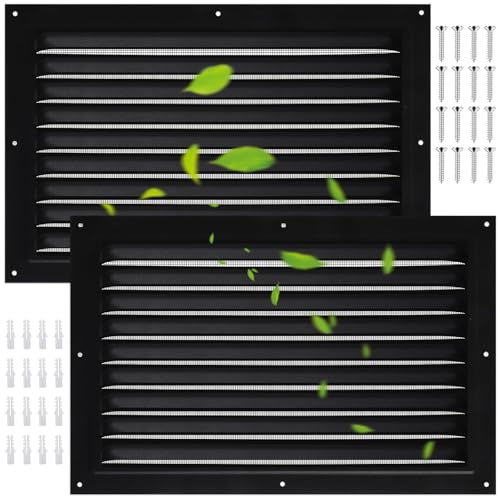
Durnovty 2 Pcs 6 x 6 Inch Gable Vents Attic Vents Metal Gable Wall Shed

$11.99
Who it is for: Small sheds that just need basic passive airflow.
A 2-pack of 6x6 in metal gable vents covers a small shed's basic ventilation need at the lowest price here, letting some trapped heat and moisture escape without any power source.
Skip it if: Larger sheds or ones with a persistent humidity or musty odor problem, which need more airflow than a small passive vent provides.
Check price on AmazonZepoty 14"x14" Aluminum Gable Vent with Screen

$39.99
Who it is for: Most mid-size sheds wanting noticeably better passive airflow than a small budget vent.
At 14x14 in with a paintable aluminum finish and built-in screen, this vent moves meaningfully more air than the smaller budget options and can be painted to match the shed's siding.
Skip it if: Sheds with a genuine heat or moisture problem that passive airflow alone hasn't solved; that calls for the active expert pick instead.
Check price on AmazonDuskSnug 40W Solar Attic Fan

$208.99
Who it is for: Larger sheds, workshop-style sheds, or hot climates where passive vents alone aren't cutting it.
This 40W solar-powered attic fan actively moves up to 2,000 CFM, dramatically more airflow than any passive gable vent can deliver, with automatic thermostat-driven operation and no wiring to household power.
Skip it if: Say plainly: skip this for a small shed with light storage. A passive gable vent is far cheaper and entirely adequate there; an active fan is overkill and unnecessary cost.
Check price on AmazonAlso worth a look


Prices change often; the button shows today's price on Amazon.
Passive gable vents vs. solar exhaust fans
| Type | Power needed | Airflow | Best for |
|---|---|---|---|
| Passive gable vent | None | Modest, relies on natural convection | Small to mid-size sheds, light storage |
| Solar exhaust fan | Solar panel, no wiring | High, actively moves hundreds to thousands of CFM | Larger sheds, workshops, hot climates |
A moisture absorber is not a vent
Hanging moisture absorber bags, like DampRid Fragrance Free Hanging Moisture Absorber at $14.32, are worth mentioning honestly here because they get shopped for alongside vents but do a different job. An absorber pulls existing moisture out of trapped, still air in a small enclosed space; it does not move air or replace airflow the way a gable vent or fan does. It can be a reasonable add-on inside a small tool cabinet or a shed corner with poor airflow, but it is not a substitute for actual ventilation in a shed that's humid throughout.
How much ventilation does a shed need?
There's no single fixed number, since it depends on shed size, climate humidity, and what's stored inside. As a practical guide, a small shed under roughly 100 sq ft generally does fine with one or two passive vents. Larger sheds, or ones storing anything moisture-sensitive like power tools or paper, benefit from either multiple passive vents at opposite ends for cross flow, or a single active solar fan that pulls air through consistently.
Signs your shed needs more ventilation
- A musty or damp smell that persists even in dry weather.
- Visible condensation on the inside of metal walls or the roof.
- Rust forming on tools or hardware faster than expected.
- Noticeably hotter air inside than the outside temperature on sunny days.
See our full shed ventilation guide for placement and sizing details beyond the products themselves.
How we chose these
Nothing here was tested for airflow in person. These picks are researched from manufacturer CFM and dimension specifications, published solar panel wattage where applicable, and recurring themes in verified owner reviews, with moisture absorbers kept clearly separate from actual ventilation products rather than blended together.
Buying tips before you order
- Place passive vents high on gable ends, where hot air naturally rises and escapes.
- Pair two passive vents at opposite ends of a shed for real cross ventilation rather than relying on just one.
- Check a solar fan's stated CFM against your shed's square footage; bigger sheds need more airflow to fully exchange air.
- Clean any screen or louver periodically; dust and debris buildup reduces airflow over time.
Shed vent comparison
| Pick | Type | Size/output | Price |
|---|---|---|---|
| Durnovty 6x6 Gable Vent 2-Pack | Passive | 6x6 in each | $11.99 |
| Zepoty 14x14 Aluminum Gable Vent | Passive | 14x14 in | $39.99 |
| DuskSnug 40W Solar Attic Fan | Active, solar | Up to 2,000 CFM | $208.99 |
The picks, side by side
Prices change often; the button shows today's price on Amazon.
More roundups
- Best sheds for riding mowers
- Best sheds under $1000
- Best small sheds
- Best storage sheds
- Best vinyl sheds
- Best 4x10 sheds
Get these picks and prices by email
One page with every item, quantity and current price, so you can cost the whole project before you buy any of it.
Used only to send the list. You can also just read it on this page.Frequently asked questions
Do I need a vent if my shed already smells musty?
A musty smell is a strong sign airflow is inadequate, and adding a vent is the right first step, not a moisture absorber alone. Absorber bags can help inside an already-vented shed by pulling residual moisture from still air, but they won't fix an underlying airflow problem in a sealed-up structure on their own.
Is a solar attic fan overkill for a small shed?
For a small shed with light, dry storage, generally yes; a passive gable vent handles that case at a fraction of the cost. A solar fan earns its price in larger sheds, workshop setups with power tools, or hot climates where passive airflow alone leaves the interior noticeably hotter and more humid than outside air.
Can I install a gable vent myself?
Most passive gable vents mount with basic screws into a pre-cut or self-cut opening in the gable end, which is a straightforward weekend project for most shed owners. Solar exhaust fans involve a roof-mounted panel and a slightly larger cut opening, still doable without an electrician since there's no household wiring involved.
What's the difference between a gable vent and an attic fan?
A gable vent is a passive, screened opening that lets air move through natural convection with no moving parts. An attic fan, whether solar or wired, actively pulls air through using a motorized blade, moving far more air per hour but requiring a power source, even if that source is just a small solar panel.
Will a moisture absorber replace the need for a vent?
No. An absorber pulls moisture from air that's already trapped and still; it does nothing to bring in fresh, drier air the way a vent does. In a shed with genuinely poor airflow, an absorber gets overwhelmed quickly and needs frequent replacement, whereas a vent addresses the underlying cause.
This page is researched guidance, not professional engineering, legal or building-code advice. Sizes, loads and permit rules vary by product and by town: check your local code and the kit manufacturer's instructions before you build.