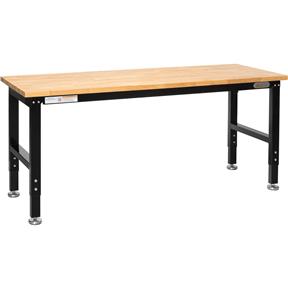
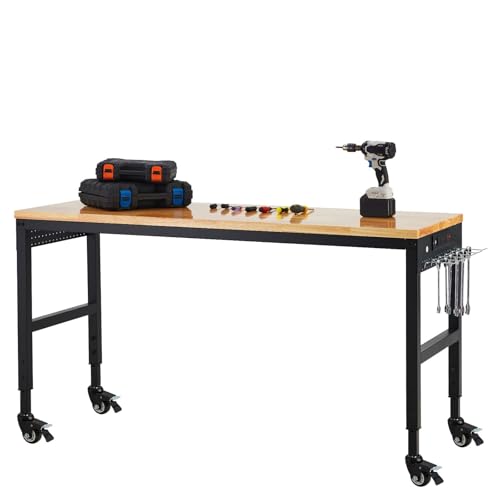
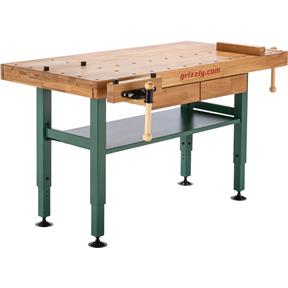
4 ft adjustable workbench

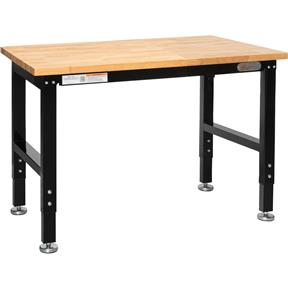
Pick the Amazon bench for the lowest entry cost and fast shipping; pick the Grizzly bench if you want outlets built into the bench and a direct parts line.
Guide
A shed becomes a workshop when five things are solved in this order: a floor that carries a loaded bench (a 300 lb bench is a modest load on a framed wood floor), safe power (a permitted subpanel for anything beyond a light and a charger), about 50 lumens per square foot of light, a bench on the long wall with a 3 ft aisle, and dust control so fine particles do not coat everything. A 10x12 is the smallest size that does this comfortably.
Not every shed can be a workshop. A framed wood shed with a plywood floor on skids handles a bench, a miter saw and a drill station well. A thin resin shed with a plastic floor panel kit and no wall studs is a poor host for a heavy bench, because nothing solid exists to fasten to and the floor flexes. Metal sheds conduct cold and condensation, so tools rust unless you ventilate and insulate.
Size matters as much as construction. A workbench needs about 2 ft of depth plus a 3 ft aisle in front of it. That works in an 8x10 shed only if nothing else lives there. Use the shed size calculator to total your gear before you commit, and see the 10x12 shed page for what else fits in that footprint.
This is the decision that sets your whole budget and your safety margin.
A heavy-gauge outdoor cord from the house is fine for a work light, a phone or battery-tool charger, a small radio and an occasional drill. It is not a workshop supply. The longer and thinner the cord, the more voltage drops under load. Motors on a table saw, compressor or dust collector draw a high surge at start-up, and on a long thin cord they run hot, stall or trip. As a rule of thumb, use 12-gauge or heavier for anything over about 25 ft, keep a single cord to a single tool, and never daisy-chain. Cords lying across a lawn are also a trip and damage hazard, and a permanent cord running to a shed is not a code-compliant feed.
A proper feed to the shed means a buried cable in conduit, a disconnect, a subpanel and branch circuits with ground-fault and arc-fault protection where your code requires it. This is licensed electrician work and needs a permit almost everywhere, as our permits and setbacks guide explains. The payoff is dedicated circuits: one for lighting, one or two for outlets over the bench, and a larger one for a compressor or dust collector. If you plan to run a 1 HP dust collector, a compressor and a saw, budget for the subpanel first and the tools second.
You can still work. Rechargeable lights and a cordless drill kit cover a surprising amount of building and repair, and our shed lighting without power guide covers the options.
A 300 lb loaded bench sounds heavy, but its weight spreads over the footprint. A 6 ft by 2 ft bench covers 12 sq ft, so the load is about 25 lb per sq ft before you add tools and stock, which is within what a standard framed wood floor carries. Residential floors are commonly designed for roughly 40 lb per sq ft of live load, and a well-built shed floor on joists 16 in on center is comparable.
The risk is point loading and flex, not average load. A bench has four feet, so each one concentrates the weight. Put a piece of plywood or a few pavers under the legs, level the bench with its adjustable feet, and make sure the legs land over a joist where you can. Heavy machines such as a cabinet saw or a loaded 42 in roller cabinet concentrate far more load. For those, check the floor spec for the shed, add blocking, or choose a concrete slab. If your shed has a plastic floor kit, do not rely on it for a loaded bench; see our shed floor kit picks and the foundation calculator to plan a base that carries the load.
Plan about 50 lumens per square foot for general workshop light, and 100 or more at the bench. In a 10x12 shed (120 sq ft) that is about 6,000 lumens overall, plus task light at the bench. A single bulb in the middle of the ceiling casts shadows from your own body, so use two or three fixtures and mount them in front of you, not behind.
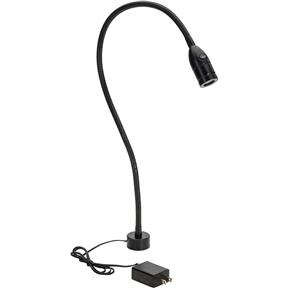
For the bench itself, a bright bar of light over the work surface and a flexible magnetic gooseneck that you can aim at a cut line cover most jobs. Rechargeable units are ideal for a shed with no wiring. White walls and ceiling help, since painting the inside a light color can lift the effective light noticeably.
Use the longest wall that has no door or window, keep the work surface at about 34 to 38 in, and leave 3 ft clear in front.
| Shed | Bench | Layout |
|---|---|---|
| 8x10 | 4 ft bench | Bench on the 8 ft back wall, vise at one end, a tool chest under or beside it, shelves above. The mower parks elsewhere, so this is a bench shed first. |
| 10x12 | 5 to 6 ft bench | Bench on the 12 ft back wall with a miter saw at one end. Storage on the side wall, a hanging air filter overhead, and a clear lane to the door. |
| 12x16 | 6 ft bench plus a second station | Bench on the long wall, a table saw on a mobile base in the middle, a dust collector on the wall, tool storage on the far wall. |
Door swing counts. An outward-swinging door saves floor, and a double door lets you roll a saw outside. Do not block the exit with a bench or a cabinet.
Each card shows the pick on Amazon and the matching Grizzly Industrial product, with one line on when to choose which.
Pick the Amazon bench for the lowest entry cost and fast shipping; pick the Grizzly bench if you want outlets built into the bench and a direct parts line.
Choose the Amazon bench to keep spending down; choose the Grizzly bench when you will run power tools on it every weekend and want the built-in outlets.
The Amazon bench is a rolling, height-adjustable oak top; the Grizzly bench is a fixed heavy-duty oak top on steel legs for a bench that never moves.
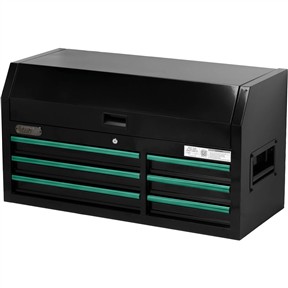
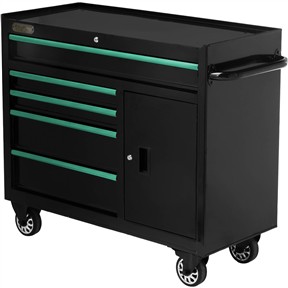
Pick the Amazon cart if you want one rolling unit; pick the Grizzly 42 in top chest if it will sit on a bench or on the matching roller cabinet.
The Amazon combo is a one-box purchase; the Grizzly roller cabinet pairs with its 42 in top chest when you want to add drawers in stages.
Both are rechargeable and magnetic, so they work with no wiring. The Amazon light is brighter on paper; the Grizzly light is a lower-output 450 lumen task light with owner reviews on grizzly.com.
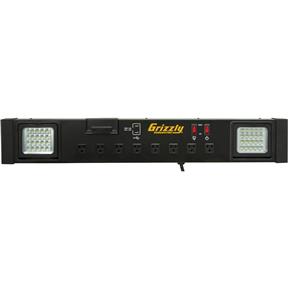
The Amazon bar is a magnetic mechanic light; the Grizzly station is a 1000 lumen bench light that doubles as a charging station for the tools you use there.
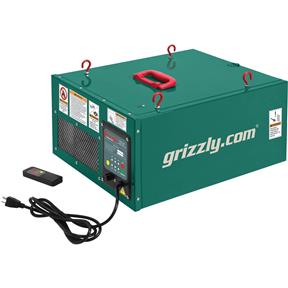
Both are 3-speed ceiling-hung filters in the 300 to 400 CFM class. The Grizzly unit is owner-rated 4.8 on grizzly.com (301 reviews); the Amazon unit comes with an RF remote.
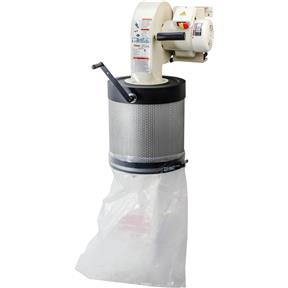
Both are 1 HP wall-mount collectors that free the floor. The Grizzly one uses a canister filter; the Amazon one uses filter bags.
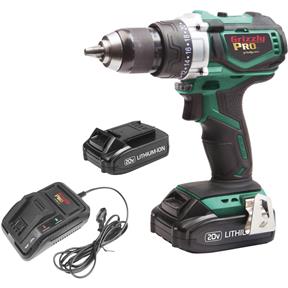
Both include two batteries and a charger. Buy into the battery platform you expect to extend later, since batteries are the lock-in.
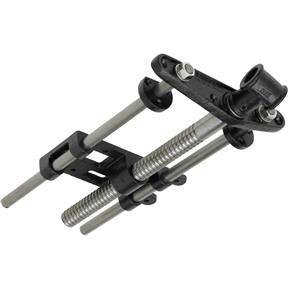
The Amazon vise is a basic front vise; the Grizzly cabinetmaker vise is the better-rated step up if you do fine joinery.
As a Grizzly Industrial affiliate, we earn from qualifying purchases. As an Amazon Associate we earn from qualifying purchases. Prices change often and Grizzly runs sales, so the buttons show current prices.
A small enclosed shed concentrates dust. Fine particles from sanding and sawing stay airborne for hours and settle on every tool. Two tools do two jobs: a hanging air filter cleans the room, and a dust collector catches chips at the machine.
The Grizzly G0738 is a 3-speed hanging air filter rated 260 to 409 CFM that hangs from the ceiling or joists; it is owner-rated 4.8 on grizzly.com (301 reviews). A 10x12 shed with 8 ft walls holds about 960 cubic feet. At 400 CFM the filter cycles the room's air roughly 25 times an hour, which is the scale you want for a space this size. The Grizzly G0785 is a 1 HP wall-mount collector with a canister filter that frees the floor. A 1 HP motor draws a significant current, so it needs its own circuit, which is another reason to add a subpanel.
For a deeper look at small-shop air cleaners, see WorkshopCalc's best air filtration systems guide, and use its dust collection CFM calculator to size a collector before you buy. Neither replaces a respirator when you sand or cut. Wear one, open the door when you can, and empty the collector bag outside.
Wood tools and steel tools both suffer in a damp shed. Cast-iron table tops and chisels rust where humidity swings. Start with airflow: our ventilation guide and vent picks cover gable and ridge vents. Condensation forms when warm humid air meets cold steel, so a bench top or saw table left uncovered on a cold morning is the first thing to rust; a coat of paste wax and a fitted cover help. Then keep water out from below: see how to keep a shed dry and the gravel pad guide.
For heat, insulation and a reflective roof underlayment help more than a fan. For cold, never use an unvented fuel heater in a closed shed: combustion gases and wood dust are a dangerous combination. If you heat the shed, use an electric unit on a proper circuit, and keep the space well ventilated while you work.
Hang long tools and frequently used hand tools on the wall above the bench. Put heavy items low and the lightest high. Drawers beat shelves for small parts. A 42 in top chest on a bench or a roller cabinet beside it holds a surprising amount, and a narrow 12 in deep chest fits a tight wall. Compare options on our tool storage picks, and see shelving for the rest. The general approach in how to organize a shed still applies: zone by how often you reach for something.
Buy in this order: floor and moisture fixes, light, bench, vise, drill kit, storage, air filter, then the stationary tools. A drill kit with two batteries and a vise on a solid bench let you build almost everything else. The cards above show each product on Amazon and, where Grizzly Industrial makes the item, direct from Grizzly. For a staged parts list at three levels, see the Shed Workshop Kit. If the shed is tight, WorkshopCalc's small workshop layout guide shows how to place machines around the bench.
If the machines you want will not fit the shed, the garage is the next place to look. GarageShopCalc's garage shop layout calculator shows which machines fit a one, two or three car garage, with or without a car parked inside.
Nothing here was installed or tested in person. The guidance comes from manufacturer specifications, published code summaries and owner reviews. Electrical work and local permit rules vary, so confirm with your building department and a licensed electrician.
Gift guide: shopping for a shed owner or DIYer? See the Shed Holiday Gift Guide 2026 for picks by budget, from the big gift to stocking stuffers.
Only for short, light use and with a heavy-gauge cord kept short. A table saw motor has a high start-up draw, and a long thin cord drops voltage and can overheat. For regular use, have a licensed electrician run a feeder and subpanel.
Almost always yes. Wiring a detached shed is electrical work that most jurisdictions permit and inspect, even when the shed itself is exempt from a building permit. Ask your building department.
A framed wood floor on joists 16 in on center is commonly designed for about 40 lb per sq ft of live load, which carries a typical bench. Plastic floor kits and thin panels carry far less. Check your shed manufacturer's floor rating and spread heavy point loads.
About 50 lumens per sq ft overall, so around 6,000 lumens for a 10x12 shed, with brighter task light directly over the bench.
An 8x10 can host a 4 ft bench if little else is stored there. A 10x12 is the comfortable minimum, and a 12x16 supports a bench plus a stationary saw.
It cleans fine airborne dust but does not catch chips at the source. Pair it with a dust collector or shop vacuum at the machine, and wear a respirator while sanding or cutting.
This page is researched guidance, not professional engineering, legal or building-code advice. Sizes, loads and permit rules vary by product and by town: check your local code and the kit manufacturer's instructions before you build.